Szombathely Live Webcams
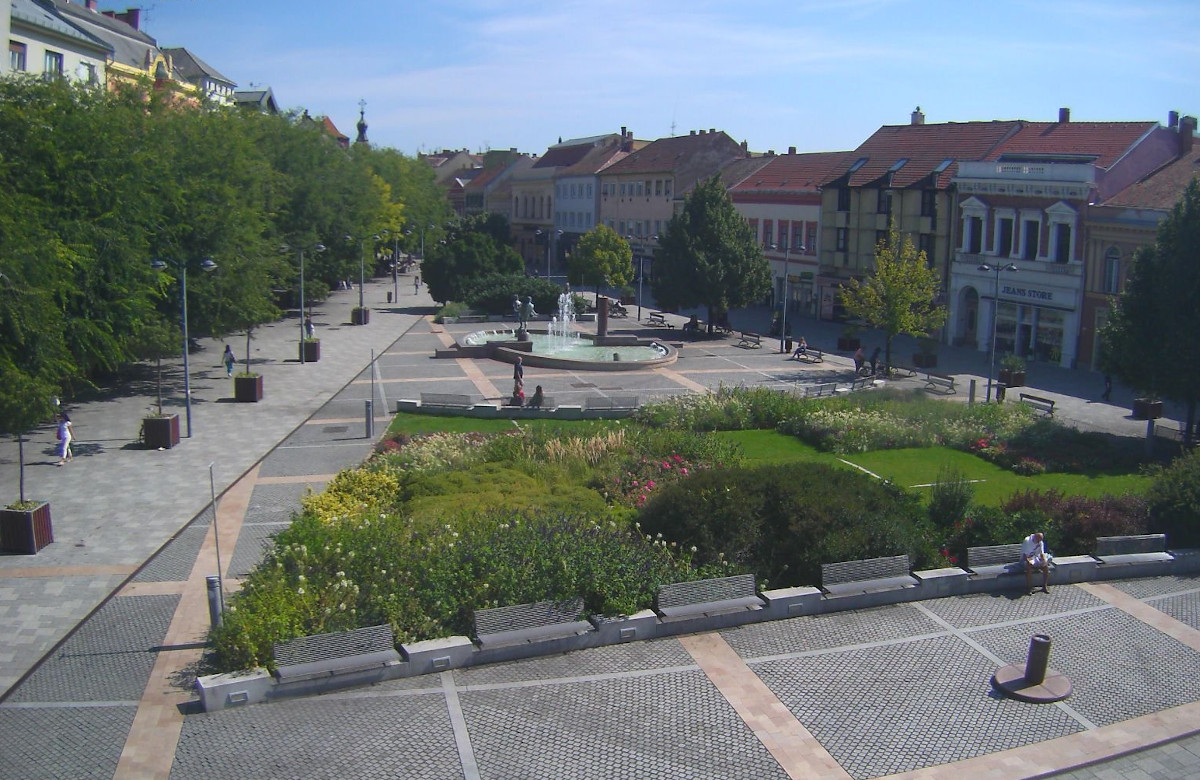
Szombathely live webcams offer the opportunity to observe life in real time in one of Hungary’s oldest cities, located just 6 miles (10 km) from the Austrian border. Live streams show central streets, main squares, the historic center, views from restaurants and hotels, cozy bars, parks, embankments, as well as the attractions of this ancient city, founded by the Romans in 45 AD under the name Savaria.
With the help of Szombathely live webcams, you can see panoramic views of the city, the surrounding hills, and natural landscapes, as well as check the current weather at any time of day from anywhere in the world. Streams operate 24/7 and allow you to assess the atmosphere, street congestion, and tourist activity.
Some webcams stream with sound, making the viewing experience even more realistic. The most popular Szombathely live webcams> are placed at the top of the list for quick access. An interactive map will show the exact location of each camera and help you choose any location of interest — from the historic center to the scenic outskirts and archaeological parks.
Brief Information About Szombathely
Szombathely is one of Hungary’s oldest cities and the administrative center of Vas County. It is considered an important cultural and economic center of the western part of the country. The city’s population is approximately 75,000–80,000 people, and its area is approximately 37 square miles (97 km²). Szombathely is known as one of the region’s oldest cities, founded during the Roman era.
The city is located in western Hungary, not far from the Austrian border, near the Alpine foothills, approximately 137 miles (220 km) southwest of Budapest. Nearby cities include Zalaegerszeg and Sopron, and on the Austrian side — Graz and Vienna, making Szombathely an important cross-border transportation hub.
Szombathely’s history begins in 45 AD, when the Romans founded the city of Savaria — one of the key centers of the province of Pannonia. Important trade and military routes of the Roman Empire passed through here. After the fall of Rome, the city experienced periods of destruction and rebuilding. During the Middle Ages, Szombathely became an episcopal center, and in the 18th–19th centuries, it actively developed as a regional administrative and trading city.
Climate of Szombathely
The city’s climate is temperate continental, with a noticeable influence from western Atlantic air masses and the proximity of the Alps. This makes the climate milder and more humid compared to the eastern regions of Hungary.
Winter is relatively mild: the average January temperature is around 32–30°F (0 to -1°C). Severe frosts are rare, snow falls irregularly and usually does not last long. Summer is warm and comfortable. In July, the warmest month, average temperatures range from 70–73°F (21–23°C). On some days, temperatures may rise above 86°F (30°C). The average annual air temperature is approximately 50–52°F (10–11°C).
The best time to visit Szombathely is from May to September. During this period, the weather is most comfortable for walks, sightseeing, and exploring the city’s Roman heritage.
Attractions of Szombathely
Szombathely has a rich historical heritage, including Roman ruins, religious monuments, and cultural sites. The city combines the ancient history of Savaria with modern architecture. The main attractions of Szombathely include:
Savaria Ruins — an archaeological complex on the site of the ancient Roman city. Here you can see the remains of forums, streets, and buildings of ancient Savaria. This is one of the most important Roman monuments in Hungary. Address: Savaria Múzeum környéke, Szombathely.
Savaria Museum — the city’s main museum, dedicated to the archaeology, history, and culture of the region. Its exhibits cover the period from the Roman era to the present day. Address: Kisfaludy Sándor u. 9, Szombathely.
St. Martin’s Cathedral — the city’s cathedral, one of the largest churches in western Hungary. Built in the 18th century in the Baroque style. Address: Berzsenyi Dániel tér, Szombathely.
Episcopal Palace — the historic residence of the bishops, an architectural monument from the Baroque era. Today, it is used for cultural events and exhibitions.
Fő tér (Main Square) — the city’s central square, surrounded by historic buildings, cafes, and shops. City celebrations and festivals are held here.
Elizabeth Park — one of the city’s largest parks, a popular recreation spot for residents and tourists.